Category: Corporate Law

  • Temporary Emergency Bridging Measure to Preserve Employment: the conditions

    Temporary Emergency Bridging Measure to Preserve Employment: the conditions

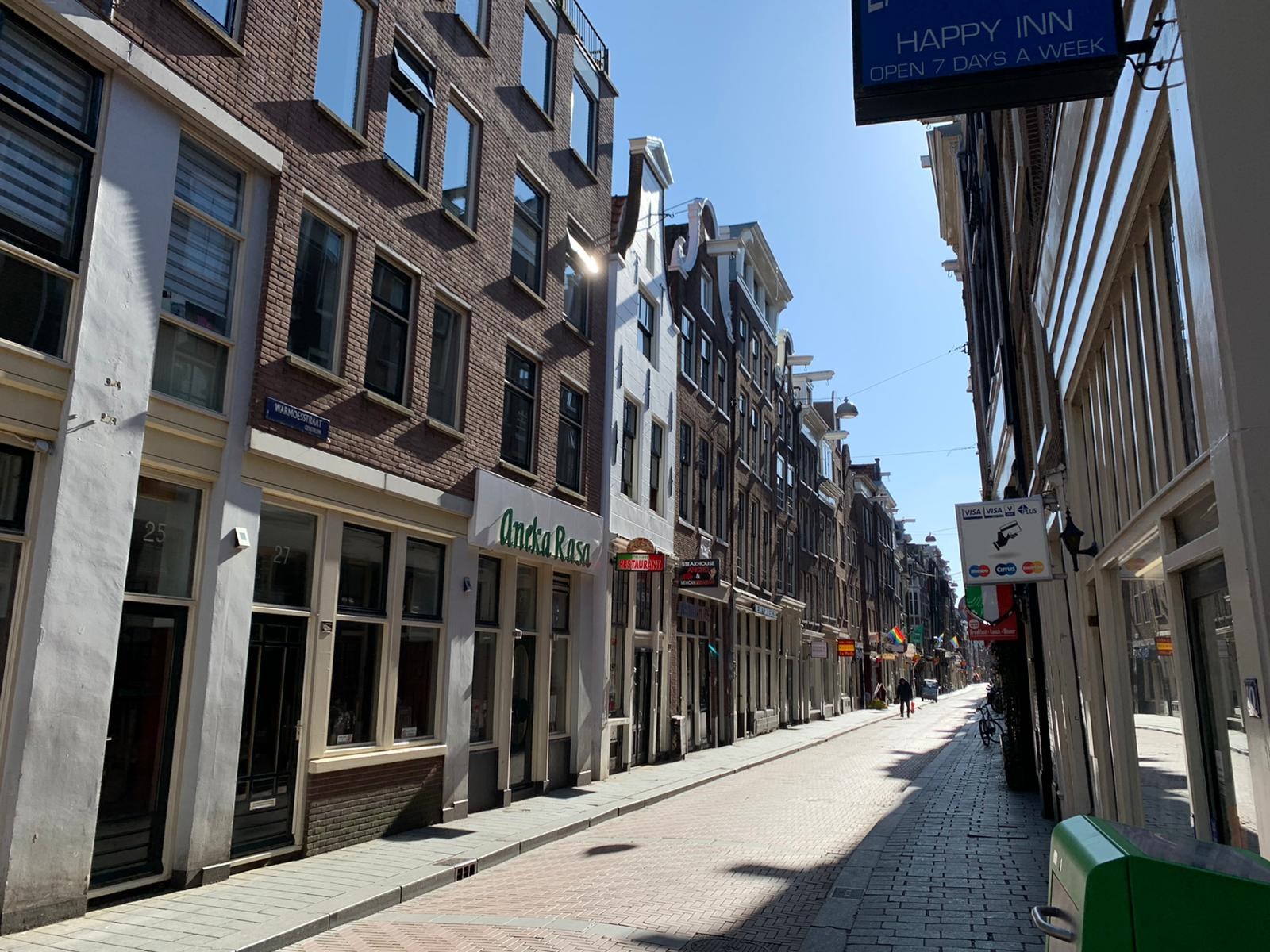
    The coronavirus has the Netherlands and the rest of the world in its grip and is seriously impacting the economy, among other things. Bars and restaurants have closed, shopping streets are empty and businesses are seeing an enormous drop in their sales. The Dutch government has announced several measures to alleviate these economic consequences. One of those measures is the Tijdelijke Noodmaatregel Overbrugging(NOW)(Temporary Emergency Bridging Measure to Preserve Employment). This scheme had been announced earlier, but the conditions for reliance on the scheme were made public on Tuesday, 31 March. We will address the main aspects of the scheme in this blog.

    1. What are the conditions and how high is the contribution?
    Employers may rely on the NOW in the event of a drop in turnover of at least 20% in a consecutive period of three calendar months between 1 March and 31 May 2020. The other condition is that an employer may not file a redundancy application on economic grounds with the UWV (Employee Insurance Agency) between 18 March and 31 May 2020. The contribution amounts to 90% of the payroll total in the event of a 100% drop in turnover. The actual contribution depends on the exact scope of the drop in turnover.

    The application for the contribution first consists of an application for an advance of 80% of the expected contribution. That amount is then paid in three instalments. It is not yet necessary to submit an accountant’s statement when applying for the advance. When the final contribution is applied for, which must be done within 24 weeks after the compensation period, that accountant’s statement must be enclosed, however. An exception applies if the contribution does not exceed a threshold yet to be determined.

    2. How is the loss of turnover calculated?
    The turnover is determined on the basis of a three-month period. The employer may at its option have the reference period for the turnover comparison commence on 1 March, 1 April or 1 May 2020. The turnover generated in the selected three-month period must then be compared with the average turnover in 2019 (divided by four). An employer must apply for the contribution per withholding tax number.

    The turnover is determined at group level. A group of companies may therefore not state the expected drop in turnover per entity. The turnover of the group or of the affiliated legal entities is therefore decisive in determining whether the NOW may be relied on.

    3. Is the entire salary taken into account in calculating the compensation?
    The contribution amounts to a maximum of 90% of the payroll total for the three-month period from March to May 2020. The payroll total is based on the wage for social insurance purposes from current employment. Additional charges and costs, such as employer’s social security contributions and employee contributions to pension and the accrual of holiday allowance are compensated. To accelerate the application procedure, a 30% surcharge for employer’s social security contributions has been opted for in all cases. No more than twice the maximum daily wage per month per individual employee is classified as wages. Wages in excess of €9538 per month are therefore not eligible for compensation.

    4. What are the consequences if I nevertheless dismiss employees on economic grounds?
    As described above, one of the conditions for relying on the NOW is that an employer may not file a redundancy application with the UWV between 18 March and 31 May 2020 on economic grounds. If an employer does so nevertheless, the UWV will handle that application in the regular manner. Depending on the outcome of the application, that will, however, have consequences for the amount of the contribution. The salaries of the employees for whom the redundancy application is filed are increased by 50% and are deducted from the payroll total on the basis of which the amount of the contribution is determined.

    5. Will the scheme be extended and what conditions will then apply?
    The possibility of extending the bridging measure has been kept open. That question will be decided on before 1 June 2020; the extension period will therefore immediately follow the first application period, which ends on 31 May 2020.

    6. As from what date may NOW applications be filed?
    The government aims to open the service desk for the applications on Monday, 6 April 2020. It will be determined on Friday, 3 April, whether that is feasible. The service desk will in any event be open by Tuesday, 14 April 2020 at the latest. Once the service desk has been opened, applications may be filed via the UWV’s website. That may be done without the use of eHerkenning or any other form of authentication or authorisation. The application must have been filed by 31 May 2020 at the latest. The UWV has announced that it aims to pay the first advances within three or four weeks after an application is filed.

    7. Are variations possible for specific sectors or companies?
    No. The scheme does not allow for sectoral or company-specific variations. Seasonal influences on the turnover are also not taken into account. The scheme is therefore not a solution for all companies.

    If you have any further questions about the Temporary Emergency Bridging Measure to Preserve Employment, please contact one of our employment lawyers at tel. no. 020-664 5111. We will be pleased to help you.

  • Government measures in the Netherlands – update 31 March

    Government measures in the Netherlands – update 31 March

    The Dutch government has taken extensive measures to help businesses affected by the corona crisis.

    The measures now in place are:

    • The new temporary measure Temporary Emergency Bridging Measure for Sustained Employment (NOW, Noodfonds Overbrugging voor behoud van Werkgelegenheid) will provide financial help for employers to help pay their employees’ wages. The unemployment benefit during short-time working scheme has been cancelled. You can apply for the NOW scheme from Monday 6 April through 31 May 2020.

    • From 16 March 2020 to 1 April 2021, the SME credit guarantee (BMKB) scheme will be extended to help SMEs that are affected by the coronavirus secure bank guarantees and bridge financing. The extended scheme is referred to as BMKB-C.

    • For agricultural entrepreneurs, the equivalent of the BMKB-C is the Credit Guarantee scheme for Agriculture (BL-C).

    • The Business loan guarantee scheme (GO) has been extended.

    • Self-employed professionals will be able to apply for an extra, temporary benefit for self-employed professionals (Tozo) to bridge the loss of income from 1 March onwards, in the municipality where they live.

    • Entrepreneurs who have a loan from microcredit provider Qredits do not have to repay their loan for a period of 6 months. During this period, the interest will be reduced to 2%. The government supports Qredits with 6 million euros.

    • The €4,000 Compensation for entrepreneurs in affected sectors scheme (TOGS) is now open for entrepreneurs in a number of specific sectors who have been affected by the coronavirus measures. You can apply to the Netherlands Enterprise Agency (in Dutch). To find out if your business is eligible for the compensation, check the SBI code list (in Dutch). At the bottom of the page, there is a search tool (Zoektool SBI-codes) where you can enter your KVK number to find out your SBI code.

    • The Incentive scheme eHealth at Home (SET). has been extended to make it easier for healthcare organisations that want to offer their clients eHealth solutions (such as video calls) to invest in apps, software or hardware.
      N.B.: As of 27 March, this subsidy is temporarily unavailable due to the unexpectedly large number of applications.

    • The government will extend the export credit insurance facility. It will be possible for companies to get a short-term guarantee with a runtime of less than 2 years. Also, other conditions are being extended. Read the news article on Rijksoverheid.nl (in Dutch).

    • The Dutch Trade and Investment Fund (DTIF) will be extended to include pre-delivery advances.

    Tax options for entrepreneurs

    • You can apply for a payment extension of 3 months for all your income tax, corporate tax, payroll tax, and turnover tax (VAT) assessements at once, by filling out a special online form (in Dutch). You need a DigiD for this, but if you don’t have one, you can ask an employee or a financial advisor to login for you, using their DigiD. You will need to fill out your RSIN number or your citizen service number (BSN), so keep these ready. The Dutch Tax Administration will put on hold any measures in place to collect payment immediately upon reception of your request.

    • You can now also apply for payment extension of several other taxes and duties: excise dutylandlord levy, environmental taxes, insurance premium tax and betting and lottery tax.

    • You will not have to pay any fines for late payment.

    • The normal collection interest rate for paying after the payment term has passed has been decreased temporarily to nearly 0%. This applies to all tax debts. The tax interest rate will also temporarily be set to the lowest possible percentage for all entrepreneurs.

    • The obligation for employers under the new Balance Employment Market Act, to report permanent employees’ employment contracts before 1 April 2020, has been extended to 1 July 2020.

    • Under certain circumstances, you can apply for unblocking of your G-account. Read the conditions and find the form (in Dutch, under ‘Deblokkeren g-rekening’).

    • Read more about the Dutch Tax Administration measures to help entrepreneurs (in Dutch only).

    Travel restrictions

    As of 19 March, there are travel restrictions in place for travel into the Netherlands. The restrictions apply to all non-EEA travellers without valid residence permits or visa, and will be in place for at least 30 days. Read the article on The Netherlands and you for full details on who is and who is not allowed to travel into the Netherlands.

    Apply for a reduction of your provisionary assessment

    Do you expect lower profits due to the coronavirus, and are you currently paying a provisionary assessment for income tax or corporate income tax? You can change your provisionary assessment. If you want to change your income tax provisionary assessment, go to the online portal for individuals: MijnBelastingdienst (in Dutch); to change a corporate tax provisionary assessment go to the business portal: MijnBelastingdienst Zakelijk (in Dutch).

    Regional Water Authority tax

    Are you unable to pay the water authority tax in time? Most Regional Water Authorities allow you to apply for a temporary extension of payment. It has also been made easier to apply for a payment arrangement. See the article on Regional Water Authority tax for more information.

    General measures to protect the public health

    • All public events and meetings are cancelled until 1 June.

    • All public places, like museums, concert halls, theatres, bars, restaurants, coffee shops, and sports clubs, are closed until 28 April.

    • Personal care professionals, who cannot keep 6 feet distance from their clients, cannot execute their profession until 28 April.

    • Shops that cannot guarantee their clients and staff that they can keep 6 feet distance from each other, are closed until 28 April.

    • Schools and universities are closed, at least until the May vacation.

    • People in so-called ‘vital professions’ may still go to work. Special arrangements are made for the schooling and daycare needs of the children of people in so-called ‘crucial professions’ (in Dutch). Contact your municipality or safety region for information, or check the RIVM and Rijksoverheid pages.

    For any questions on above measures, please contact Elias van Kampen at elias.vankampen@actlegal-fort.com or +31 (0)20 664 5111

  • The Employment Bridging Emergency Fund in 10 points

    The Employment Bridging Emergency Fund in 10 points

    1. Introduction of the Employment Bridging Emergency Fund (NOW)

    [vcex_spacing size=”14px”]In light of the economic consequences of the coronavirus, the Employment Bridging Emergency Fund (Noodmaatregel Overbrugging voor Werkbehoud – NOW) has been introduced with immediate effect. The NOW provides for temporary wage cost subsidy for employers that are impacted by a drop in turnover. The NOW has retroactive effect from 1 March 2020.

    2. Withdrawal of short-time working scheme

    [vcex_spacing size=”38px”]The short-time working scheme (regeling werktijdverkorting – wtv) has been withdrawn with immediate effect. Applications already filed for the short-time working scheme will be handled as applications for the NOW.

    3. NOW conditions

    [vcex_spacing size=”40px”]Two conditions apply to the NOW: (i) you expect a drop in turnover of at least 20% as from 1 March 2020; and (ii) you will not lay off any staff on economic grounds during the period in which the NOW can be relied on.

    4. Duration of the NOW

    The NOW applies for a period of three months. One extension of a further three months is possible. Further conditions may be attached to that extension. It is not yet clear what exactly those conditions will be.

    5. Amount of the NOW

    The contribution amounts to 90% of the payroll total in the event of a drop in turnover of 100%. If the drop in turnover is lower, the contribution is determined pro rata to the drop in turnover. It is not yet clear exactly which remuneration components are counted in the payroll total.

    6. Flexible contracts

    Unlike in the short-time working scheme, flexible contracts, such as agency contracts and stand-by contracts, also fall within the scope of the NOW. That is of course favourable for sectors in which flexible contracts are frequently used, such as the hospitality industry.

    7. Advance

    The contribution under the NOW is awarded as an advance. The advance amounts to 80% of the expected contribution. If, for instance, a 50% drop in turnover is expected, the advance amounts to 36% of the payroll total. The exact drop in turnover is determined at a later time. A correction may be made when the final contribution is determined.

    8. Applying for the NOW

    Applications for the NOW must be filed with the UWV (Employee Insurance Agency). It is not yet possible to file an application. You will be informed as soon as that is possible. Applications in excess of an amount yet to be determined require an auditor’s report. If you have already filed an application for the short-time working scheme, you need not file a new application for the NOW.

    9. Consequences of the NOW for employees

    Employees are entitled to continued payment of their entire wages during the term of the NOW. Unlike the short-time working scheme, the NOW does not affect their unemployment benefits entitlement.

    10. Self-employed persons

    The NOW does not apply to self-employed persons. The Besluit bijstandverlening zelfstandigen (Social Assistance (Self-Employed Persons) Decree) applies to self-employed persons who are forced to cease their operations.

  • Does the coronavirus constitute an event of force majeure?

    Does the coronavirus constitute an event of force majeure?

    The coronavirus is spreading. The number of infections is increasing rapidly and the government has announced drastic measures to control the spread of the virus. Public life has virtually come to a standstill as a result. Trade and industry are also suffering from the exceptional situation facing the Netherlands and large parts of the world. Many companies will therefore most likely be unable at some point to perform all or some of their contractual obligations. Their contracting parties will in their turn incur losses as a result.

    The question presents itself whether the corona pandemic and the government measures imposed as a result justify reliance on force majeure and, if so, what consequences successful reliance on force majeure will have.

    1. What is the legal definition of force majeure? 

    If a debtor fails to perform an obligation, the law provides that an event of force majeure is involved if the debtor cannot be blamed for the breach. That is the case if the breach is not due to any fault of the debtor and is not at its risk under the contract or by generally accepted standards.

    In practice, briefly stated, this means that the debtor cannot perform its obligation as a result of an impediment that is not attributable to the debtor. 

    2. May parties contract out of the statutory force majeure regulations?

    Contracting parties may opt to contract out of the statutory force majeure regulations. That is frequently done in practice. Many (Dutch and international) contracts describe what the parties regard as force majeure and what consequences they attach to it. Parties may, for instance, classify circumstances as force majeure that are not classified as such by law. Government measures and force majeure at a supplier, for instance, are regularly classified as force majeure. It is then a matter of contract interpretation whether, for instance, the obligatory closure of bars and restaurants comes under the contractual definition of force majeure. If so, that does not yet mean that reliance on force majeure will succeed. There must also be a sufficient connection between the circumstance in question (the government measure) and the impossibility to perform the obligation in question. The interpretation of the agreement and the specific situation are therefore always relevant.

    Once it has been established that force majeure exists under the contract, it must be ascertained whether the consequences are regulated in the contract. The parties may opt, for instance, to limit or rather to expand the other party’s rights under the law. That may be described in general terms or in very exact terms. It may relate to (unilateral) amendment or termination of the contract, but also to the obligation to observe waiting periods or to take measures to minimise the consequences of force majeure. The contractual arrangement prevails over the law and must therefore be the first point of reference.

    3. Does the statutory arrangement apply if the contract contains no provisions on force majeure?

    If force majeure is not regulated in the contract, the statutory arrangement applies. It is apparent from case law that strict requirements apply to force majeure. The impossibility to perform the obligation must be such that it is practically impossible for the debtor to perform, or performance must be so disadvantageous that it cannot be required of the debtor. Force majeure must be proven by the party that relies on it. That is usually the party that is required to perform but is unable to do so, i.e. the debtor. 

    4. Does the coronavirus justify reliance on force majeure?

    It cannot be said beforehand whether the coronavirus or the government measures taken in response justify reliance on force majeure. It must be assessed in each individual case what exactly the obligation entails, whether performance is indeed impossible and whether the reason for that impossibility is due to the corona crisis or the measures consequently imposed. All the specific circumstances must then be taken into account. If, for instance, the obligation can be performed with the help of a government aid measure, reliance on force majeure is unlikely to succeed. If performance of the obligation would jeopardise the debtor’s health, which is possible in the case of the coronavirus, the likelihood of successful reliance on force majeure is greater. At the time of the bird flu crisis in 2005, a court assumed force majeure when the debtor was unable to take delivery of eggs from its supplier due to a transport ban imposed by the government.

    5. What happens if force majeure is established?

    If an event of force majeure is established, the creditor can no longer demand performance of the obligation in question. The creditor furthermore cannot claim reimbursement of loss incurred. This applies for the duration of the event of force majeure. But the creditor is not left entirely empty handed. As a rule, it may opt to dissolve (ontbinden) all or part of the agreement, so that it is released from its own obligations. It can reclaim any advance payments made after such dissolution. If the debtor benefits from its failure to perform an obligation, the creditor may, in principle, also claim that benefit. But that benefit is capped at the creditor’s loss and is awarded only insofar as that is reasonable. The specific circumstances of the case play an important role also in this respect.

    No court judgments in the field of force majeure as a result of the corona outbreak have been published yet. We will therefore have to wait and see how courts deal with this issue in specific cases. We will keep you informed.

  • The ten most frequently asked employment law questions regarding the coronavirus

    The ten most frequently asked employment law questions regarding the coronavirus

    The coronavirus has the Netherlands and the rest of the world in its grip. As of March 12 2020, additional measures apply that are also relevant to employers. Since the number of infections in the Netherlands is rapidly increasing, we will answer the ten most frequently asked employment law questions regarding the coronavirus in this blog.

    1. Can employers force their employees to work from home?
      As of 12 March 2020, the authorities advise employees to work from home whenever possible. Employers may obligate their employers to do so in these circumstances. It must of course be possible for the employees in question to work from home. Also, the employer must ensure that the obligations under working conditions and working hours legislation are observed also at home. Employees who show any symptoms, such as a runny nose, coughing and fever, are required to stay at home.[vcex_spacing size=”20px”]
    2. What precautions must employers take against the coronavirus?
      Employers must protect the health and safety of their employees. Employers are therefore expected to protect their employees as far as possible against infection with the coronavirus. Employers will have to take precautions for that purpose. As of 12 March 2020, assemblies at work that are attended by more than 100 persons are no longer permitted. Other precautions may include distributing disinfecting hand gel to employees, giving hygiene instructions and advising employees against travelling to risk areas.[vcex_spacing size=”20px”]
    3. Can employers obligate employees to take leave?
      No, that is not possible. Employers cannot obligate employees to take leave.[vcex_spacing size=”20px”]
    4. Must employers continue to pay their employees’ salaries if they are required to remain in quarantine?
      Yes, in principle employers must continue to pay the salaries of employees who are required to remain in quarantine. If employees who cannot or may not work from home nevertheless stay at home because they are afraid of being infected with the coronavirus at work, the obligation to continue to pay their salaries does not apply.[vcex_spacing size=”20px”]
    5. May employers prohibit employees from travelling to risk areas in their private time?
      No, that is not possible in principle. Employers may of course inform employees in writing about risk areas and advise them not to travel there. They can state, for instance, that if employees nevertheless travel to a risk area, the consequences, if any, are at their risk.[vcex_spacing size=”20px”]
    6. May employers force employees to submit to a coronavirus test?
      No, only a company doctor may do so. The privacy rules continue to apply. The coronavirus has not changed them.[vcex_spacing size=”20px”]
    7.  Can employers get financial support to pay wages?
      With effect from 1 March 2020, Employers may apply for the new temporary Employment Bridging Emergency Fund  (Noodfonds Overbrugging Werkgelegenheid, or NOW), which provides for financial support for employers to pay their employees’ wages during the corona crisis. Companies that expect a turnover loss of at least 20% may claim a compensation for their wage costs for a period of 3 months. This 3 months’ period may be extended for another period of 3 months. Employers may claim a maximum of 90% of their wage bill, depending on how much turnover they  lost. In order to be eligible for this financial support, employers must promise that they will not dismiss employees for economic reasons during the period in which they receive the support.[vcex_spacing size=”20px”]
    8. Are employees entitled to leave if the schools of their children close due to the coronavirus?
      Yes, in that case employees are entitled to short-term emergency leave. Emergency leave applies to urgent, extraordinary and unforeseen circumstances. During that leave, employers are required to continue to pay the salaries of the employees in question. If a collective bargaining agreement applies, it may include different or additional provisions. Emergency leave may last from a few hours to a few days. It is therefore not a long-term solution.[vcex_spacing size=”20px”]
    9. May employees refuse to come to work for fear of the coronavirus?
      Employers may require of their employees that they work at the location agreed on in the employment contract, for instance. Employees may therefore not simply refuse to go to work for fear of the coronavirus. If employees nevertheless stay at home, that may constitute refusal to perform work. Refusal to perform work may be grounds for summary dismissal. That is of course otherwise if the employees are not allowed to come to work because they have symptoms.[vcex_spacing size=”20px”]
    10. May employees refuse to travel abroad to attend a business meeting?
      That depends on the travel advice issued by the Ministry of Foreign Affairs. Employers are required to make a careful decision in this case. In the case of a business trip to a red risk area, the Ministry of Foreign Affairs advises against travelling there. In the case of an orange risk area, the business trip must be essential.

    If you have any questions about the employment law consequences of the coronavirus, please contact our partner employment law Elias van Kampen at elias.vankampen@actlegal-fort.com.

  • Netherlands Commercial Court open for business

    Netherlands Commercial Court open for business

    In 2017 we wrote a blog about the planned opening of a new commercial court in Amsterdam, the Netherlands Commercial Court (‘NCC’) [ link blog ]. With a small delay the NCC ((NCC District Court and NCC Court of Appeal (‘NCCA’)) has now officially been established. It launched at January 1st of this year and on March 8th the first judgement was already delivered, demonstrating its promised ability to “provide swift and firm guidance in complex litigation”.

    The NCC procedures are designed to handle complex, international business disputes as swiftly and efficiently as possible. The NCC is built on the solid foundation of the Dutch judiciary, which is highly respected and ranked internationally for being the most efficient, reliable and transparent worldwide. It is based on the principles of accountability, transparent and stables laws, open government and accessible and impartial dispute resolution (for more information: https://worldjusticeproject.org/our-work/research-and-data/wjp-rule-law-index-2019).

    The NCC and NCCA offers litigants the opportunity to litigate in English and will be able to give judgments in English. A matter may be submitted to NCC if parties have explicitly decided to litigate before the NCC.

    A foreign lawyer can speak in the Netherlands Commercial Court; lawyers who are a member of the Bar in an EU or EEA Member State or Switzerland can perform the same duties as a Dutch lawyer as long as they work in conjunction with a member of the Dutch Bar.

    In the case of its first judgement, the parties were based in the Netherlands, Switzerland and Ireland and in summary proceedings the NCC granted permission for pledged shares to be sold and transferred, instead of a public auction (article 3:251 of the Dutch Civil Code) because it agreed that the contemplated transaction would deliver the highest value for the pledged shares and facilitate the business’s recovery.

    For more information about the judgement see the NCC website.

    For more information on the procedure at the NCC in general, see the Rules of Procedure and the Explanotary Notes.

  • Franchising: A very successful trading concept

    Franchising: A very successful trading concept

    The amount of enterprises using the franchise concept  is still increasing: worldwide and also in The Netherlands. Franchise can be described – in short – as a contract under which the franchisor grants the franchisee the right to conduct a business using the franchisor’s business method and intellectual property rights, like a trade name. The purpose is to supply products. The franchisee pays for the use of these rights.

    Franchises may be subject to any form of business entity existing under Dutch law, in particular:

    • private limited liability companies;
    • public companies;
    • sole proprietorships;
    • general partnerships; and
    • limited partnerships.

    Franchising in The Netherlands – No Dutch Franchise Act

    A Dutch Franchise Act does not exists in The Netherlands. The Dutch laws does not contain a specific act with respect to franchise and distribution agreements. Hence, a franchise agreement under Dutch law is governed by the rules of general civil law, together with specific rules that are applicable to specific parts of the contract.

    Franchising in the Netherlands – The licensed rights

    The licensed rights can include the licensed right to use:

    • trademark names;
    • secret commercial know-how;
    • and other distinguishing features, in the sale of products or services.

    The use of franchise agreements is widely spread in The Netherlands, but beware that specific arrangements can be prohibited by EU and national competition law.

    Registered trademarks are protected by the Benelux Treaty for Intellectual Property. The registrant of a Benelux trademark has exclusive rights for specific classes of goods or services in Belgium, the Netherlands and Luxembourg if a trademark is registered in the public trademark registry of the Benelux Office for Intellectual Property (BOIP). In addition, the registrant has exclusive rights for specific classes of goods or services in the European Union if a trademark is registered as a community trademark in the public trademark registry of the Office for Harmonisation of the Internal Market (OHIM) of the European Union. A preliminary trademark search can be conducted on the BOIP website.

    Please note, know-how is not protected by any intellectual property right. However, know-how may be protected under the general provisions of Dutch unfair competition law (including civil tort). Know-how could be contractually protected by including confidentiality (non-disclosure) obligations in an agreement (for example, a franchise agreement). Confidentiality covenants in franchise agreements are enforceable. The franchisee typically commits itself, for the duration of the

    contract as well as following its termination, to keeping all details of the franchisor’s business operations confidential. This will typically extend to non-patented know-how materials. Franchising contracts in the Netherlands may include a financial penalty provision that can be invoked in the event of the other party violating the confidentiality clause. The courts shall have the right to mitigate such penalties. This mitigation right cannot be contractually excluded.

    Franchising in the Netherlands – Reasonableness and fairness

    There is a general legal obligation on parties to deal with each other in good faith. In the Netherlands, general civil law is governed by the principles of reasonableness and fairness. Franchise agreements

    are therefore also governed by reasonableness and fairness. Freedom of contract dictates that parties may agree to draw up contracts in whichever language they choose. However, on the basis of the principle of reasonableness and fairness one could argue that disclosure documents and agreements should be made available in a language that the other party understands. Therefore most of the time the documents are in English language.

    Franchising in the Netherlands – Franchise agreement

    A franchise agreement is a contract by which the franchisor licenses its trade name and/or business system and practices for a fee to an independent company (the franchisee).

    It is very important to review the terms and conditions set forth in franchise documents such as:

    • financial obligations;
    • the length/term of the agreement;
    • choice of venue and choice of law with respect to disputes;
    • renewal rights;
    • territorial exclusivity;
    • requirements for remodelling or refurbishing the location;
    • the goodwill associated with the franchisor’s trademarks;
    • restrictions on transfer;
    • default/termination provisions.

    Are you interested in franchising in the Netherlands?

    If you are interested in franchising in the Netherlands and you have any legal questions concerning franchising, please do not hesitate to contact us. Our team of experienced lawyers would be happy to help you.

  • Opening of the Netherlands Commercial Court

    Opening of the Netherlands Commercial Court

    Introduction

    A new commercial court, The Netherlands Commercial Court (‘NCC’), will be established in the Netherlands, set up to settle international trade disputes. As the name suggests, this court will be dedicated to commercial and, more importantly, international disputes.

    This is in line with the practice in other countries, where commercial law disputes can be decided by specialized courts, such as the Commercial Court in England, the Tribunaux de commerce in France and the Handelsgerichte in some German-speaking countries. Singapore and India also make use of a similar kind of court.

    The Netherlands Commercial Court will focus on international trade disputes in a broad sense. Trade has always been international and even more so during the last decades. Not only has English become the first language for cross-border transactions, it has also conquered the domestic domain. Many companies in the Netherlands are either part of an international concern or do business with foreign companies. Because of this, parties involved in cross-border disputes can be forced to conduct court proceedings in a foreign language, making the proceedings more difficult and costly. The Dutch judiciary decided there is need for a more efficient way of litigation and established an English-speaking commercial court.

    A short overview of the characteristics of NCC

    court in Amsterdam
    The NCC will be set up at the courts of Amsterdam, both at the District Court as well as at the Appeal Court level

    specialised chambers
    All disputes will be resolved by three (Dutch) judges in both first instance and appeal, in contrast to other commercial courts where there is only one judge. The judges of the Netherlands Commercial Court are specialised in international trade law, and are experts in handling commercial disputes

    in English
    The NCC will enable parties to conduct their Dutch legal proceedings in the English language, except when the Dutch language is selected by all the parties. However, when it comes to cassation at the Supreme Court, this proceeding will still be in Dutch

    International conflicts only
    Contrary to the initial proposal, the court will be competent in international conflicts only, meaning that there must be either a conflict including at least one foreign party or foreign law being applicable on the matter. Purely national conflicts will not be heard or decided upon

    Dutch civil procedural law
    The NCC will apply Dutch civil procedural law

    costs
    Court fees for cases brought before the Netherlands Commercial Court (NCC) and the Netherlands Commercial Court of Appeal (NCCA) are proposed to be € 15,000 and € 20,000 respectively. Although higher than ordinary Dutch legal proceedings, this is a cost-effective alternative in comparison to having cases heard by international commercial courts in other countries where fees may be much higher. Furthermore, there are plans to allow the NCC, in certain cases, to mitigate costs for those parties that demonstrably cannot carry them

    voluntary
    Litigation before the NCC can only take place on a voluntary basis, so an written agreement is needed to settle a dispute through the NCC. Parties can choose to bring their dispute before the NCC at any moment

    no minimum interest criterion
    Claims of an undetermined value and disputes between small businesses can also be judged by the Netherlands Commercial Court. However, there are a few limitations; cases that belong at the sub-district court (i.e. ‘’cantonal court cases’’, such as employment law cases, rental disputes,  claims below  € 25,000, etc.) are excluded from the NCC.

    Who can go to the NCC

    All parties, non-natural persons (such as companies) and natural persons, can submit a matter to the Netherlands Commercial Court. Parties do not have to have any link with the Netherlands, making it an ideal venue for parties from two different states looking for a “neutral” third state.

    Launch of the NCC

    The NCC was originally proposed to start on the 1st of January 2017, however this date has now become the 1st of January 2018. On the 18th of July 2017 the amendment of the law to provide for the use of English as the language of proceedings and judgements was tabled before the Dutch Parliament. When this legislation has come into force the NCC can open its doors.

    Advantages

    We believe proceeding before the Netherlands Commercial Court is advantageous for the following reasons:

    • the court shall apply Dutch civil procedural law, which is pragmatic, efficient and cost-effective;
    • the language of the Netherlands Commercial Court proceedings shall be in English, unless Dutch is chosen, allowing foreign, English-speaking lawyers to be actively involved in these proceedings, decreasing the cost of translation of documents;
    • there will be specialized Dutch judges with technical and commercial expertise and experience;
    • effective and shorter proceedings;
    • ability to split proceedings into a merits and quantification of damages phase;
    • evidence may be offered in French, German, English or Dutch, saving time and translation costs;
    • paperless litigation;
    • recovery options (prejudgment seizure). In the Netherlands, even if a creditor has no title to enforcement yet, he may attach any assets of his debtor under a so-called prejudgment seizure. The attached assets act as security for the creditor’s claim.

    Conclusion

    The NCC has the potential to become a good alternative for the increasingly expensive international arbitration procedures and a good option for international trade proceedings.

    Fort Advocaten is a midsized law firm based in Amsterdam. 30 business lawyers work in specialized teams for both national and international clients. With over 20 years of experience, our legal services focus on real estate law and corporate law, such as corporate litigation. Our teams are well recognized for their experience working in different industries. We guarantee a high level of quality and service due to thorough knowledge of both law and jurisprudence, size and efficiency.

    If you have any questions regarding this article or are in need of any advice, please feel free to contact us at any time.

    Written by Annemiek Nass and Lynn Rook


  • The right of suspension – Insolvency and Restructuring dos and don’ts

    The right of suspension – Insolvency and Restructuring dos and don’ts

    If your business extends across international borders into the jurisdiction of the Netherlands, you have undoubtedly been confronted with agreements and procedures that are governed by Dutch law.

    In this series of blogs FORT’s insolvency and restructuring specialists explain various Dutch legal concepts and dos and dont’s that may be of use to you if you are faced with a Dutch counterparty in financial distress. In this blog I will discuss the right of suspension (opschortingsrecht).

    The right of suspension explained

    Suppose you have ordered goods, but only receive part of your order. Your supplier nevertheless requests full payment. Or a second example: you have agreed to regularly deliver goods to a customer. After a while the customer is in arrears of payment. You would of course want to reduce the risk of paying for goods that will never be delivered or of delivering goods that will never be paid for.

    That risk arises in particular when you are confronted with a counterparty that is unwilling or unable to fulfil its obligation. The question is whether you are obliged to live up to your end of the deal. The answer is short: No! On certain conditions you have the right to suspend your obligation.

    Conditions for exercising your right of suspension

    In order for you to suspend your obligation, several conditions must be met. First, you must have a due claim against your counterparty. This implies that your counterparty must be in default of, for example, delivery or payment. Furthermore, there must be a cohesive relation between the due claim and the obligation that is to be suspended. That cohesive relation is assumed to be present when the obligations stem from the same or similar agreements between the parties involved. Finally, the suspension must be proportionate. For example, the delivery of 200 computers should not be suspended when the customer is only a few days late with its payment of an insignificant amount of the overall purchase price.

    If these conditions are met, it must be examined to what extent the right of suspension applies. Parties may deviate from the standard legal provision. Hence, parties may mutually agree to restrict or extend the right of suspension or to exclude it as a whole. If your counterparty intends to deviate from the standard legal provision, this is usually defined in their general terms and conditions.

    Please be aware of these conditions and the possibilities of deviating from the provisions of Section 6:52 of the Dutch Civil Code. These aspects should be considered before invoking the right to suspend your obligation. You could be held liable for all the loss incurred by your counterparty if the right of suspension is invoked improperly.

    All in all, the right of suspension is an effective remedy. It can prevent harmful situations arising from default on the part of your counterparty.